
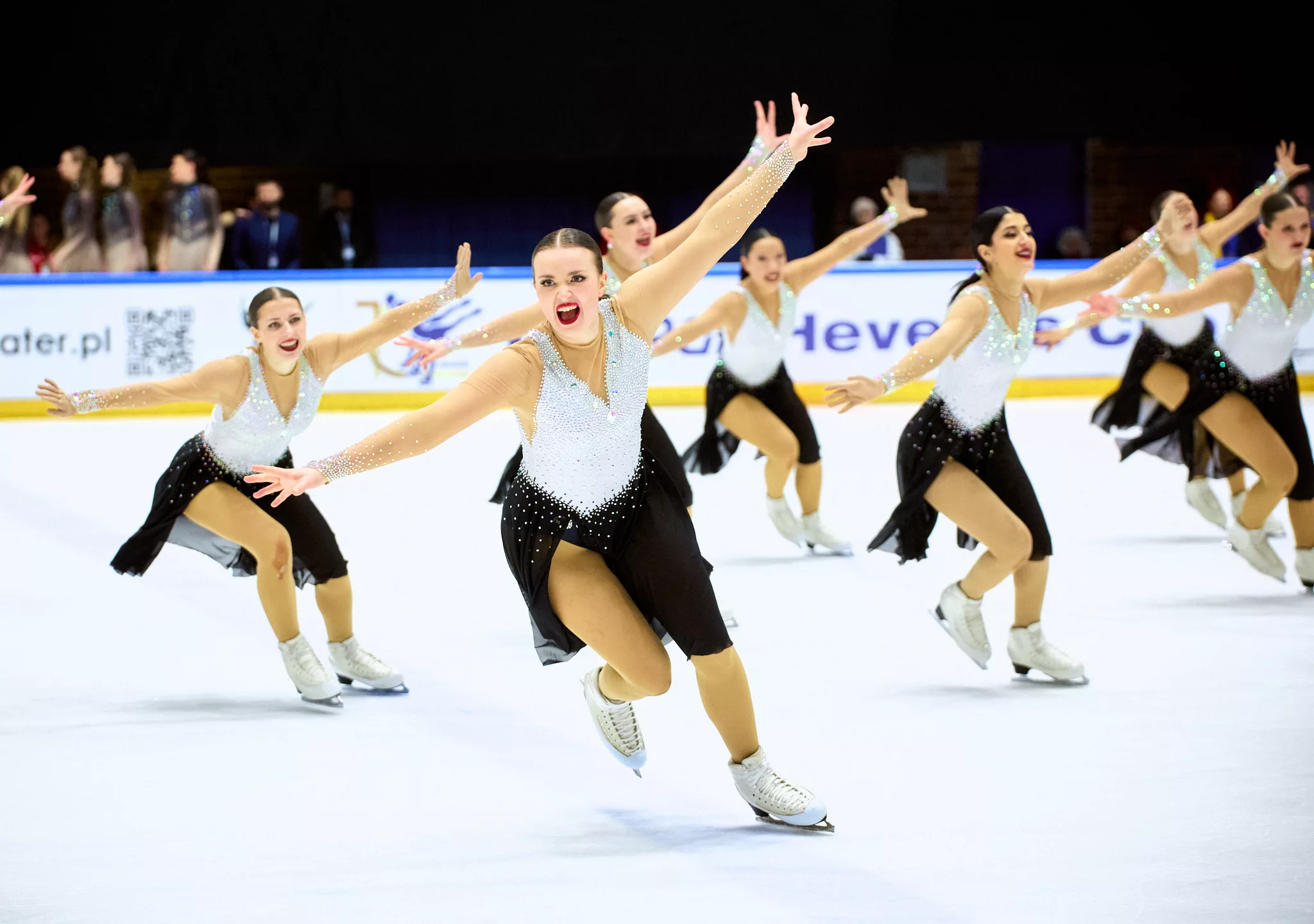
The judging system is based on four criteria divided into two areas. Technique covers difficulty and synchronization, while artistry focuses on originality and performance. Each criterion is assessed using a scoring scale of up to 100 points.
For difficulty, judges consider several aspects, including shapes, Full Team Movements, difficulty features, patterns and ice coverage. Synchronization is assessed through the skaters' ability to perform in unison.
On the artistic side, originality takes into account choreography, creativity, program unity and the connection between movements and music. Performance is evaluated through elements such as the skaters' presence, commitment, projection and musical sensitivity.
The ISU also specifies how serious errors affect scores. Under the difficulty marking guide, one serious error limits the maximum score to 89 points. Two or more serious errors reduce that maximum to 79 points. Such errors may include falls or mistakes that disrupt the delivery of the program.
The document also outlines referee deductions. A fall results in a one-point deduction per skater. An illegal movement carries a four-point penalty, while a violation of music requirements, such as the prescribed theme or tempo, leads to a one-point deduction.