
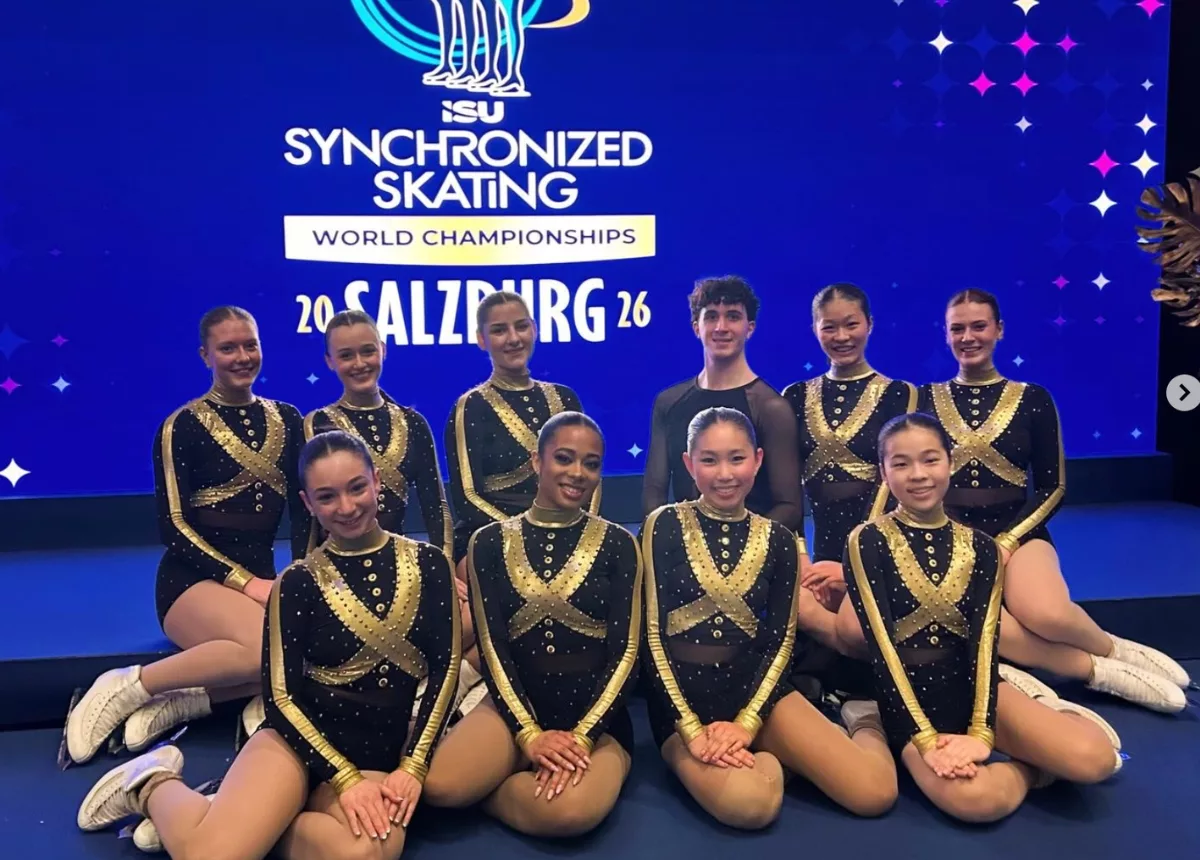
How did the ISU’s request for a nine-skater format come about?
Danielle Ostrower, Director of Teams Elite Synchronized Skating Teams (USA): The request for the Synchro9 format came to me out of a direct conversation with our delegation and a representative from the ISU Synchro9 working group. During that discussion, they provided information about the Demo that would take place in Austria with teams from Canada, Finland and the US.
When did you start working on this program, and about how many hours per week did it involve?
We began working on the program on March 17th! Since we were using our own athletes who were competing through Junior Worlds, it was important to us that we didn’t take their focus or energy away from that event, so we intentionally waited until after it concluded to start. Because of the later start, the process was quite intensive. We spent roughly 3 hours per day over the course of about 3.5 weeks to prepare the program.
Thinking differently about the discipline
In your opinion, what are the main challenges or limitations of Synchro9?
They aren’t really limitations or challenges in the traditional sense- it’s more that you have to think about the discipline differently. With a nine-skater format, you are pushed to explore new shapes, new configurations and different ways of using the ice. It really becomes an opportunity to be creative and find fresh ways to keep the program dynamic and exciting.
What ISU rules or guidelines did you receive for this demonstration program? Were there any required elements, a set duration, or other specific instructions?
We primarily received broad guidelines rather than strict rules. The focus was incorporating recognizable synchronized skating shapes- such as blocks, lines, wheels, and circles- and using them in creative ways, particularly through highlighting and shape-shifting.
There was a set program duration of 3:30, but beyond that, the intention seemed to be to keep things as open as possible. I think the goal was to allow teams the freedom to push creative boundaries, which in turn could help inform future rule development for the discipline.
How does working with nine skaters change the team’s usual dynamic?
I felt that with nine skaters, the dynamic becomes much more intimate. The athletes have to form a quick, tight bond with each other because there is less room to blend in and more reliance on each individual. It also requires a higher level of versatility. With a smaller group, everyone needs to be able to do everything- each skater has to be well-rounded and adaptable across all elements of the program.
"You can take more risks with choreography, transitions, and how you use the ice"
What opportunities do you think this format could bring to the development of synchronized skating?
I think this format opens the door to a lot more creative freedom. With fewer skaters, you can take more risks with choreography, transitions, and how you use the ice, which makes programs feel more fun, entertaining, quick paced, and exhilarating. I also think that style of performance has the potential to attract a broader audience beyond the traditional synchro community. The speed, clarity, and creativity make it more immediately engaging for spectators who may not already be familiar with the discipline, which could really help drive growth for the sport.
What did you have to adapt or leave out because of this format? Were there things you could not include, or any frustrations along the way?
Honestly, the main challenge was trying to fit too much in. With 9 skaters, everything moves faster and feels more compact, so initially I thought we could include more shapes and tricks than was actually realistic.
It wasn’t so much that there were things we couldn’t include, but more about refining and editing- making sure we weren’t overloading the program and that each moment had clarity and impact.
There has been a lot of criticism around this new format. What is your view after having experienced it firsthand?
I think a lot of the criticism comes from the fact that people are naturally averse to change- it can feel scary and unknown, especially in a sport with such a strong tradition. But after experiencing it firsthand, I would say it’s really not that different from what we already do.
The core of synchronized skating is still there, and in many ways, the speed, attack, and creativity in this format make it even more exciting. Once teams and audiences have more exposure to it and actually get the chance to work within it, I think it will become much easier to understand and embrace.
What advice would you give to coaches or teams who might want to try this format in the future?
My advice would be to jump in with both feet. I think teams will be surprised by how fun and energizing this format is once they start working within it. Don’t be afraid to challenge yourself in a new way or step outside of what feels familiar. It asks you to think a bit differently, but that’s exactly where a lot fo the creativity comes from. Very quickly, you start to feel how special it can be when everything comes together in such a tight, fast and expressive way.
What is next for your Synchro9 team? Will you continue training in the coming weeks or months?
We have actually just begun training again, and we plan to have the team competing next season in this new category.
The experience so far has been very positive, and we are continuing to build on what we started. We are really excited about what this means for the future of synchronized skating and the potential this format brings for continued growth and innovation in the sport.
At the 2026 World Synchronized Skating Championships in Salzburg, Synchro9 was presented in a demonstration by three specially formed teams: the United States, featured in this interview, as well as Canada and Finland. We will come back to it soon.